

FUNCTION AND IMPORTANCE OF LUMINOUS IN WATCHES
Watch Studio Lovers, you've probably heard the term luminous when delving into watches. The luminous feature is one of the appealing elements that add value to a watch. With its ability to glow in the dark, luminous not only serves an aesthetic purpose but is also very practical, especially in low-light conditions. But how exactly does luminous work on watches, and what do you need to know about this feature? Let's discuss!
What is Luminous on a Watch?
Luminous on a watch refers to a material or coating placed on the indices, hands, or other parts of the watch that can emit light in the dark. This light allows the user to read the time even with minimal external illumination.
Luminous technology first appeared in the early 20th century and has continued to evolve. From radioactive materials to modern, safe-to-use materials, luminous has become a favorite feature in the world of horology.
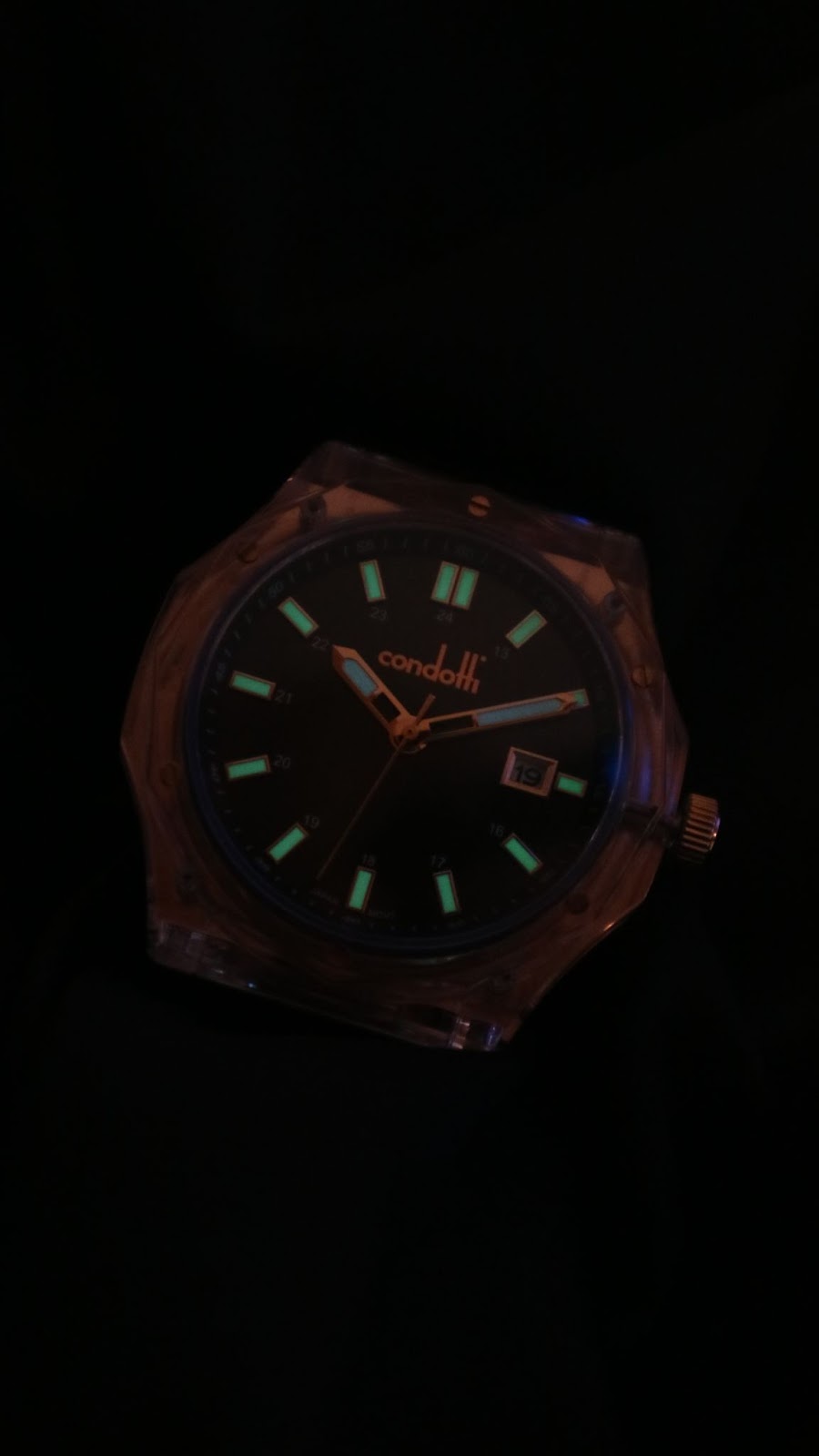
Luminous Feature on Condotti Leggero
Source: Personal Documentation
How Does Luminous Work?
Luminous works by absorbing light energy, whether from sunlight or lamps, which then emits light in the dark. This process is known as photoluminescence. There are several types of materials used to create the luminous effect on watches, the first being Radium (Old and Dangerous Material). Initially, radium was used as a luminous material. However, after it was discovered that radium is highly radioactive and very dangerous to health, its use was discontinued in the 1960s.
Secondly, Tritium (Next Generation). Tritium is a material that is still radioactive, but with a very low level of radiation. It is usually used in the form of small tubes (tritium tubes) that provide constant light without needing to absorb light first. However, due to its radioactive nature, even with low radiation levels, Tritium is not a very safe material to use, especially for watches that are typically designed to last for a long time.
Now, non-radioactive luminous materials have been discovered, namely Super-LumiNova (Modern Material). Super-LumiNova is the most common non-radioactive luminous material used today. It works by absorbing light and slowly releasing it in the dark. Its advantages are that it is safe to use and has good durability.

Source: Google Images
Advantages and Disadvantages of Luminous on Watches
Advantages:
-
Practical in dark conditions: Helps you read the time in low light, such as while diving, camping, or at night.
-
Aesthetic: Adds visual value with a cool glow effect.
-
Modern material innovation: Materials like Super-LumiNova provide brighter and longer-lasting light compared to older materials.
Disadvantages:
-
Limited light duration: For photoluminescent materials like Super-LumiNova, the light will dim over time, especially if not frequently exposed to light.
-
Higher production costs: Watches with quality luminous features are usually more expensive as they require additional technology.

Source: Google Images
Tips for Caring for a Watch with Luminous
Firstly, if your luminous watch uses materials like Super-LumiNova, make sure your watch is frequently exposed to light to charge its luminous. Secondly, avoid exposure to chemicals, as luminous materials can be affected by certain harsh chemicals, so avoid cleaning your watch with strong liquids.
And most importantly, have your watch serviced regularly. However, for luminous watches that use tritium or special luminous materials, make sure you have them serviced at a trusted place.
Conclusion
Luminous on a watch is a perfect blend of function and aesthetics. With continuously developing technology, this feature not only provides convenience but also becomes a unique attraction for collectors and users. Whether you are a fan of reliable diver watches for the sea, or want to look cool with a glow in the dark, luminous is a feature worth considering. So, are you convinced to have a watch with a luminous feature too? We recommend it for those who are interested.